Genotoxicity Activity
The following plants show the Genotoxicity activity due to the presence of phytochemicals.
Cinnamomum verum, called true cinnamon tree or Ceylon cinnamon tree is a small evergreen tree belonging to the family Lauraceae, native to Sri Lanka. Among other species, its inner bark is used to make cinnamon. The old botanical synonym for the tree - Cinnamomum zeylanicum - is derived from Sri Lan...
The clove tree is an evergreen that grows up to 8–12 m tall, with large leaves and crimson flowers grouped in terminal clusters. The flower buds initially have a pale hue, gradually turn green, then transition to a bright red when ready for harvest. Cloves are harvested at 1.5–2.0 cm long, and c...
Ginger is one of the most commonly consumed dietary condiments in the world (Surh et al. 1999). The oleoresin (i.e., oily resin) from the rhizomes (i.e., roots) of ginger contains many bioactive components, such as [6]-gingerol which is the primary pungent ingredient that is believed to ...
The following compounds have found to show the Genotoxicity.
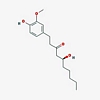
| 6-GINGEROL | |
| IUPAC Name | (5S)-5-hydroxy-1-(4-hydroxy-3-methoxyphenyl)decan-3-one |
|---|---|
| Molecular formula | C17H26O4 ..more |
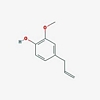
| EUGENOL | |
| IUPAC Name | 2-methoxy-4-prop-2-enylphenol |
|---|---|
| Molecular formula | C10H12O2 ..more |